What is a normal blood pressure reading, and how do you read Malaysia's chart?
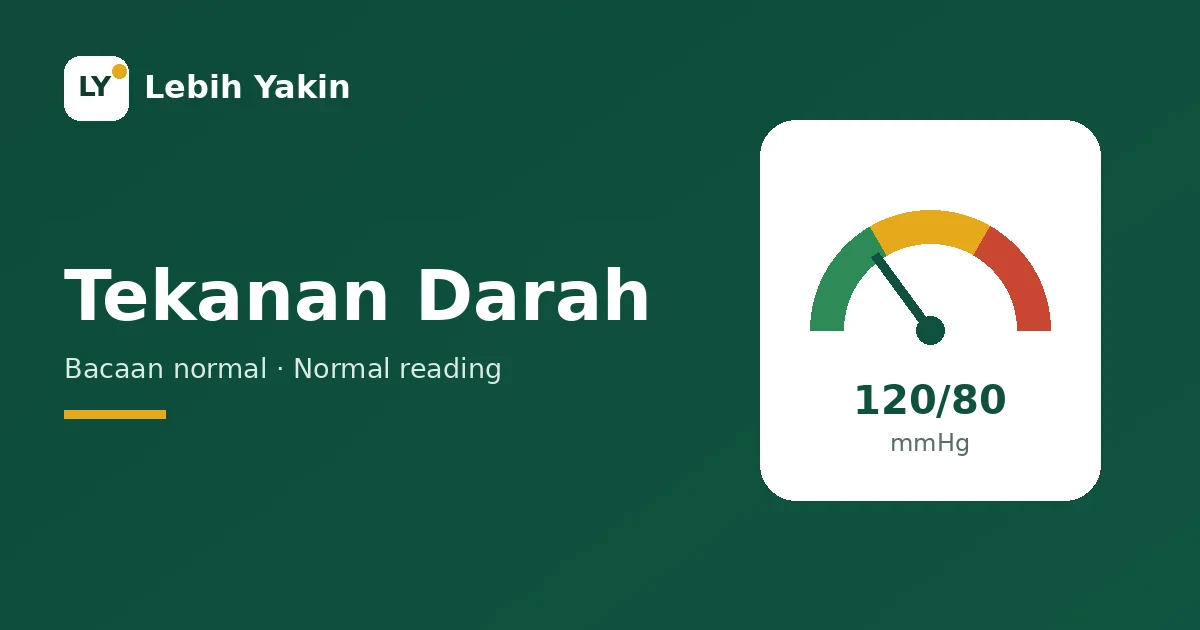
Under Malaysia's clinical practice guideline on hypertension (5th edition, 2018), an optimal adult blood pressure is below 120/80 mmHg, and normal is 120–129 systolic and/or 80–84 diastolic. Readings of 130–139/85–89 are classed as “at risk”. Hypertension means 140/90 mmHg or higher that stays high when measured at least twice on two separate occasions. One high reading alone does not mean you have high blood pressure.
What do the two numbers mean?
A reading such as 120/80 mmHg has two numbers. The top number is systolic pressure, the pressure in your blood vessels when the heart pumps. The bottom number is diastolic pressure, the pressure when the heart rests between beats. The unit is millimetres of mercury (mmHg).
Both numbers matter. In the chart below, “and/or” means you fall into the higher category if either number reaches it. For example, 125/92 mmHg counts as stage 1 because the bottom number is 92.
What is Malaysia's adult blood pressure chart?
Classification of clinic blood pressure in adults, from the Clinical Practice Guidelines: Management of Hypertension, 5th edition (2018), the latest edition we found in November 2026:
- Optimal: below 120 and below 80 mmHg.
- Normal: 120–129 and/or 80–84 mmHg.
- At risk: 130–139 and/or 85–89 mmHg.
- Stage 1 (mild) hypertension: 140–159 and/or 90–99 mmHg.
- Stage 2 (moderate) hypertension: 160–179 and/or 100–109 mmHg.
- Stage 3 (severe) hypertension: 180 or more and/or 110 or more mmHg.
- Isolated systolic hypertension: top number 140 or more but bottom number below 90 mmHg. The guideline says it is common after age 50.
Readings taken at home are usually lower than at the clinic, so the guideline treats a home average above 135/85 mmHg as elevated.
Does normal blood pressure change with age?
The chart above applies to all adults, men and women. What changes with age is the treatment target for people already diagnosed. For most patients the guideline aims for below 140/90 mmHg. For older adults the systolic target is below 140 mmHg at ages 65–80 and below 150 mmHg above 80. High-risk patients have a lower target of below 130/80 mmHg. Your doctor sets your target.
Children and teenagers are assessed with separate charts by age and height, and pregnancy has its own guidance. This article covers adults only.
How many Malaysians have high blood pressure?
The Ministry of Health's National Health and Morbidity Survey (NHMS) 2023 found that 29.2% of adults in Malaysia have hypertension. Of these, 17.3% already knew, while another 11.9% had raised blood pressure without knowing it.
The guideline calls hypertension a silent disease. Many people feel nothing, so measuring is the only way to know. It recommends that every adult over 18 has their blood pressure checked at least once a year, and more often with a family history, excess weight or an at-risk reading.
How do you measure blood pressure correctly?
A rushed measurement can give a falsely high reading. The guideline recommends:
- No smoking, eating, coffee or other caffeinated drinks, or exercise for at least 30 minutes beforehand.
- Sit in a quiet room for at least 1 minute with your back supported and your arm resting, for example on a table.
- Keep your legs uncrossed and do not talk.
- Use the right cuff size placed at heart level. A cuff that is too small reads falsely high; one that is too big reads falsely low.
- Take at least two readings on the same arm, about 1–2 minutes apart.
- Use a validated upper-arm electronic device. The guideline does not recommend wrist or finger devices for home use.
How do you monitor blood pressure at home?
Home monitoring helps your doctor see your real pattern. The guideline suggests:
- Measure for at least 3 days, ideally 7.
- Measure at about the same times: once in the morning (before medicine if you are on treatment) and once in the evening (before a meal).
- Take two readings each time, at least 1 minute apart.
- Record readings straight away in a logbook, or use a device with memory.
- Ignore the first day's readings and average the rest. Bring the record to your doctor.
When does a high reading need urgent action?
If a reading is 180/110 mmHg or higher, rest and measure again after 5 minutes. If the second reading is the same or higher, or you have symptoms, seek medical help. Call 999 if you have chest pain, difficulty breathing or a change in alertness.
For lower readings, the guideline suggests follow-up based on the first reading: below 120/80, recheck within a year; 120–139/80–89, within 3–6 months; 140–159/90–99, confirm within two months; 160–179/100–109, evaluate within a month.
Which lifestyle steps help blood pressure?
The guideline says healthy living should be part of care for everyone with hypertension or an at-risk reading:
- Cut salt to below 5 g a day (about one teaspoon), or below 2 g of sodium.
- Lose weight if you are overweight. The guideline links each 1 kg lost with roughly a 1 mmHg drop in the top number.
- Do at least 150 minutes of moderate-intensity exercise a week.
- Eat more fruit, vegetables and legumes, and less saturated fat.
- Stop smoking to lower your heart disease risk. See how to quit smoking in Malaysia.
Related guides: how men can lose belly fat, how to reduce stress and how to sleep better.
What about medicines, supplements and herbal products?
If your doctor has prescribed blood pressure medicine, do not stop or change it without talking to them. The guideline notes that most patients need long-term treatment.
Tell your doctor about every supplement and traditional product you take. The guideline lists herbal supplements among the factors that can trigger very high blood pressure. Some “herbal” men's products have also been found to contain hidden prescription drugs that are dangerous for heart patients. Read how to spot fake men's performance products and how to check a product is KKM registered.
The products in our shop are not medicines for high blood pressure. If you have high blood pressure or heart disease, or take regular medicine, ask a doctor or pharmacist before taking any supplement.
Frequently asked questions
What is a normal blood pressure reading?
Under Malaysia's 2018 hypertension guideline, below 120/80 mmHg is optimal and 120–129/80–84 mmHg is normal. 130–139/85–89 is at risk, and repeated readings of 140/90 mmHg or more count as hypertension.
Is 130/85 high?
It is in the “at risk” range (130–139 and/or 85–89 mmHg), not yet hypertension. Adopt healthy habits and recheck within 3–6 months, or follow your doctor's advice.
Is normal blood pressure different for men and women?
No. The same chart applies to adult men and women. Pregnancy has separate guidance.
What is normal blood pressure by age?
The normal categories are the same for all adults. What differs is the treatment target for people with hypertension, for example a top number below 140 mmHg at ages 65–80 and below 150 mmHg above 80.
Does one high reading mean I have hypertension?
No. Hypertension is diagnosed when readings of 140/90 mmHg or more stay high on at least two measurements on separate occasions. Rushing, caffeine, smoking or anxiety can raise a single reading.
What home reading counts as high?
A home average above 135/85 mmHg is treated as elevated. Measure for at least 3 days, ignore the first day and average the rest.
Sources
- Kementerian Kesihatan Malaysia, Persatuan Hipertensi Malaysia & Akademi Perubatan Malaysia — Clinical Practice Guidelines: Management of Hypertension (5th ed., 2018) (checked 10 November 2026)
- Institut Kesihatan Umum, KKM — National Health and Morbidity Survey (NHMS) 2023: Fact Sheet (checked 10 November 2026)
This article is general health information based on Malaysia's Ministry of Health guideline and NHMS data, not medical advice. High blood pressure is diagnosed and treated by a doctor.